

AC Installation Decisions: The Technical Advantage of Inverter-Driven Systems
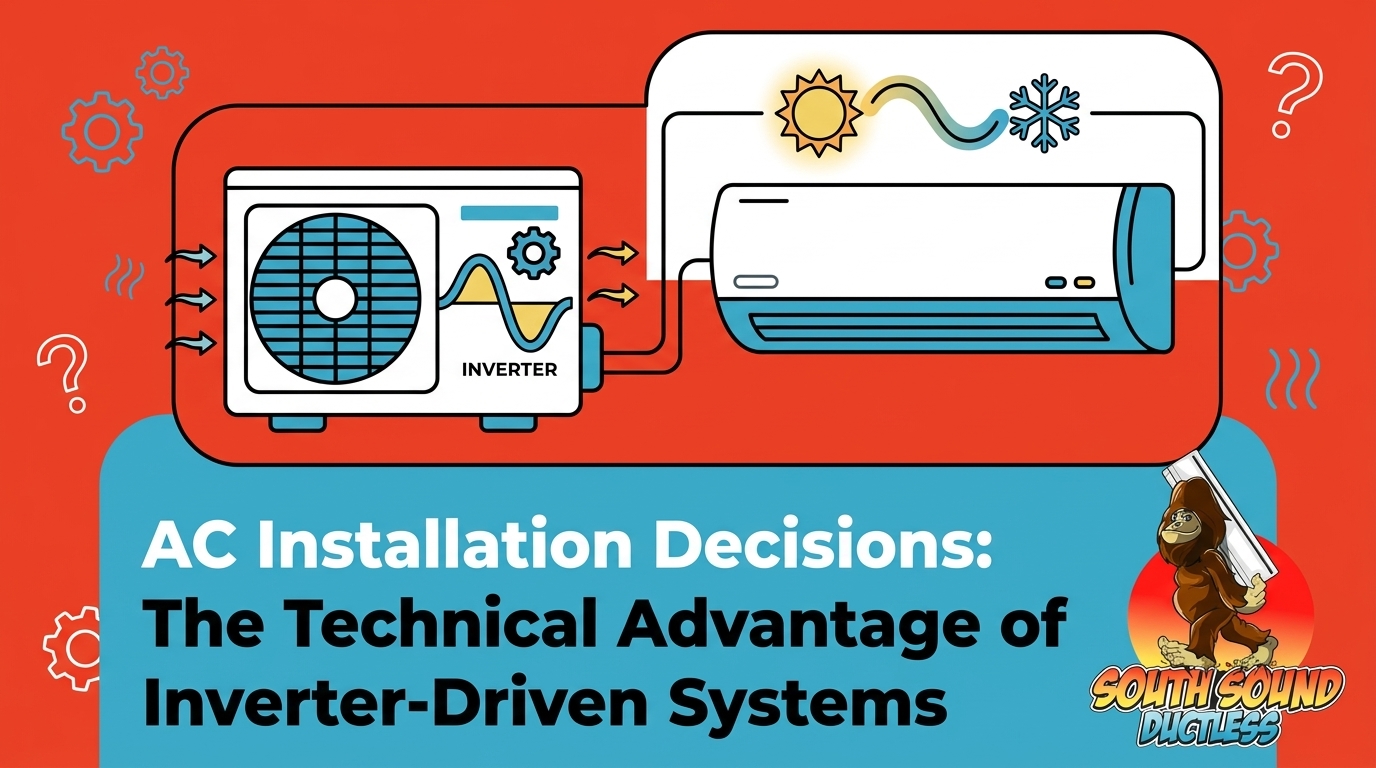
Solving the Summer Heat Challenge with Modern AC Installation
Your air conditioner is running nonstop, but the living room still feels uncomfortably warm, leaving you searching for common homeowner questions answered as the indoor temperature creeps higher. At South Sound Ductless, this is a familiar scenario our team sees during peak July heatwaves, especially when Tacoma homeowners are relying on outdated or inefficient cooling methods that simply cannot keep up with the thermal load of the house. The concrete problem is clear: your current setup is struggling to maintain comfortable indoor temperatures, and you are facing the critical decision of whether to upgrade to advanced technology. Determining whether to install a modern ductless system as a primary cooling source requires a clear understanding of the technical baseline of modern heat extraction.
If you are evaluating your options, exploring professional air conditioning services is the first step toward a permanent solution. Upgrading your home with a professional AC installation ensures that your new system is mathematically sized by our experts to handle the exact cooling demands of your specific floor plan.
In our experience, modern air conditioning is not just about blowing cold air into a room; it is about the physics of heat extraction. An air conditioner works by absorbing ambient indoor heat and transferring it outside, leaving cooler, dehumidified air behind. The efficiency of this process dictates how comfortable your home feels and how much energy you consume. When our technicians evaluate older systems operating during a severe heatwave, we often find they lack the mechanical capacity to remove heat faster than the sun radiates it through your roof and windows. Upgrading to an inverter-driven heat pump changes this dynamic entirely, introducing a level of continuous, variable-capacity cooling that fundamentally outperforms traditional single-stage compressors.
How an Inverter-Driven Heat Pump Masters Peak Summer Temperatures
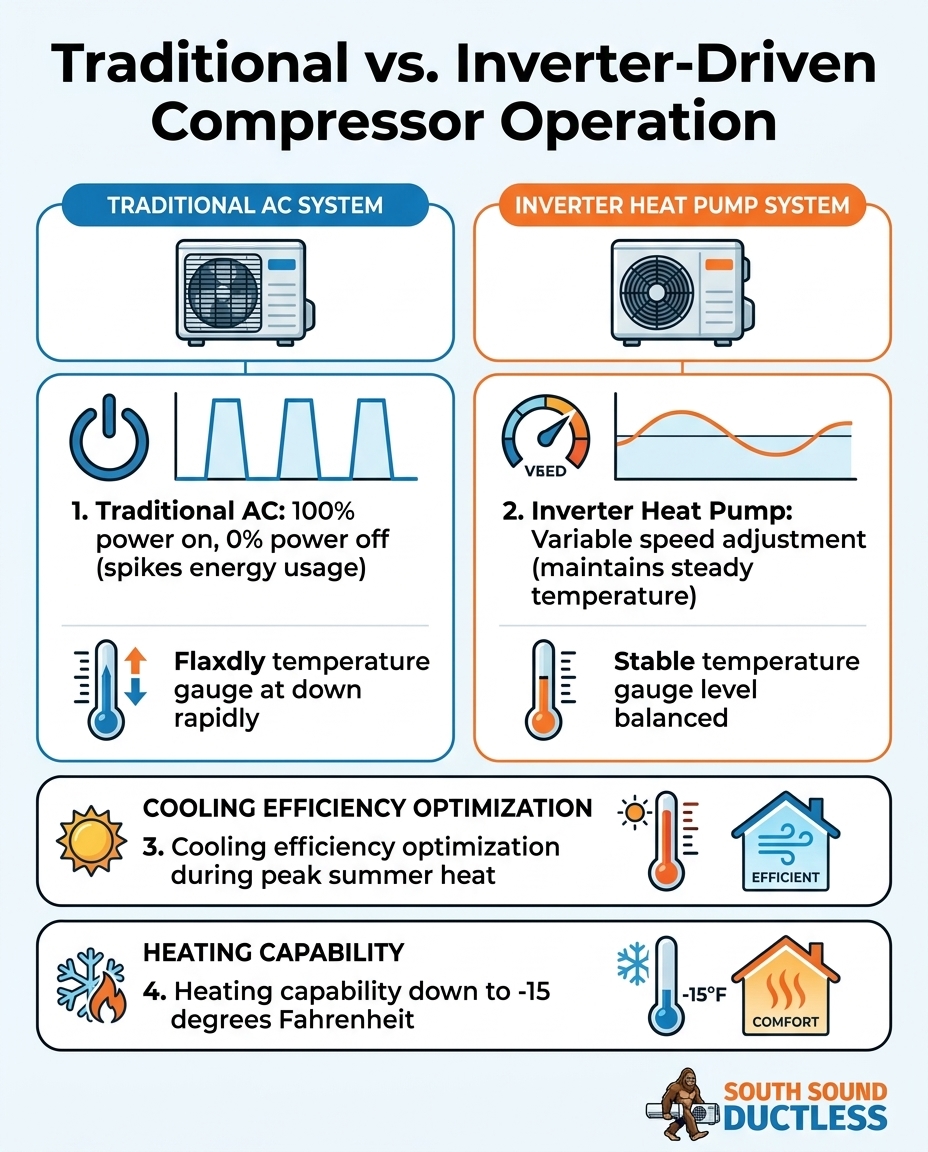
To understand why traditional air conditioners struggle during extreme heat, you have to look at the mechanics of the compressor. The problem we frequently encounter with standard air conditioners is their single-stage, on/off operation. When the thermostat detects a rise in temperature, a traditional compressor kicks on at 100% capacity. It blasts cold air until the target temperature is reached, then shuts off completely. This constant cycling creates noticeable temperature swings, leaves excess humidity in the air, and causes massive electrical spikes every time the system starts up.
The cause of this inefficiency is the lack of variable control. Traditional systems only know two speeds: fully on or fully off. When peak summer heat hits, these systems end up short-cycling or running continuously at maximum capacity, drawing heavy amperage and accelerating mechanical wear and tear on the components.
Our team highly recommends the continuous, variable-speed operation of an inverter-driven heat pump as the ultimate solution. Instead of turning on and off, an inverter system constantly measures the indoor temperature and adjusts the compressor speed in real time to match the exact cooling demand. If the room only needs a small amount of cooling to maintain 70 degrees, the compressor slows down and gently trickles in conditioned air. If you are exploring ductless cooling options, you will find that this technology eliminates temperature swings entirely.
• Operation Speed — Traditional Single-Stage AC: 100% On or 0% Off — Inverter-Driven Heat Pump: Variable (0% to 100%)
• Temperature Control — Traditional Single-Stage AC: Fluctuates 2-4 degrees — Inverter-Driven Heat Pump: Maintains exact set temperature
• Energy Consumption — Traditional Single-Stage AC: High spikes during startup — Inverter-Driven Heat Pump: Low, steady electrical draw
• Dehumidification — Traditional Single-Stage AC: Poor (cycles are too short) — Inverter-Driven Heat Pump: Excellent (continuous air circulation)
By operating continuously at lower speeds, the inverter-driven heat pump provides superior dehumidification, making the indoor air feel significantly cooler and more comfortable without having to lower the thermostat to extremes, vastly improving your home's indoor air quality (IAQ) during the muggiest summer days.
Bypassing Ductwork: Cooling Solutions for Older Pacific Northwest Homes
Many homes in our region were constructed long before central air conditioning became a standard feature. With Tacoma's increasingly warm summers exposing the cooling vulnerabilities of older homes originally built only for mild weather, our customers are finding that window units and portable fans are no longer sufficient. The primary architectural limitation of these older properties is the complete lack of central forced-air ductwork. Installing traditional ductwork in a historic home often requires lowering ceilings, sacrificing closet space, and undertaking massive, disruptive renovations.
Ductless air handlers provide a highly engineered workaround that our installation crews utilize daily. Instead of pushing conditioned air through a leaky network of hidden metal tubes, a ductless system distributes air directly into individual living spaces. An outdoor compressor connects to one or more indoor air-handling units via a small conduit containing the power cable, refrigerant tubing, and a condensate drain. This configuration entirely bypasses the energy loss associated with leaky ducts, which can waste up to 30% of a home's cooling output.
Designing these systems requires specialized knowledge. Working with a local company like South Sound Ductless, which has specialized expertise in designing ductless systems specifically for older Pacific Northwest homes, ensures that the unique architectural quirks of your property are factored into the design. Professional load calculations are strictly necessary for this process. Our technicians measure square footage, ceiling height, insulation values, and window orientation to determine the precise cooling capacity required for each room.
• Targeted Zoning: Ductless configurations allow you to create independent temperature zones throughout the house.
• Energy Conservation: You can cool the living room during the day and shift the cooling power to the bedrooms at night, rather than paying to cool empty spaces.
• Architectural Preservation: The small three-inch hole required for the conduit preserves the integrity of historic walls and ceilings.
Because an inverter-driven heat pump scales its output based on the specific demand of each active zone, it operates with remarkable efficiency, providing powerful relief from the summer heat without compromising the structure of an older home.
The Dual Benefit: Preparing for Both Summer Heatwaves and Winter Cold
While our immediate priority in July is establishing a reliable cooling strategy to conquer the peak summer heat, investing in modern HVAC technology provides a massive secondary advantage. The high-efficiency cooling systems our team installs in the summer provide the exact same advanced technology needed for the colder months. A heat pump is not just an air conditioner; it is a two-way thermal transfer system. Understanding this dual capability is critical when researching an AC replacement, as it solves two distinct seasonal challenges with a single installation.
The secret to this dual functionality is a component called the reversing valve. During the summer, the system absorbs heat from inside your home and pumps it outside. When the seasons eventually change, the reversing valve simply switches the direction of the refrigerant flow. However, during the peak-heat of summer, this robust two-way design truly shines by handling massive thermal loads. Because the system is engineered to extract thermal energy even in extreme conditions, its cooling performance and energy-efficiency under heavy summer load are unmatched.
A common point of skepticism among homeowners is whether this technology is truly a year-round solution. The technical reality is that there is always thermal energy present in the air, allowing modern systems to operate efficiently in any season. But right now, our Tacoma customers love the immediate, powerful relief it brings to their sweltering living rooms.
By upgrading your cooling system in the summer, you are ensuring superior indoor air quality and dehumidification today, while simultaneously installing a primary, high-efficiency system that will carry you reliably through the entire year.
Energy Efficiency and Load Management During Peak Operation
When the July temperature spikes, so does the electrical grid's load. At South Sound Ductless, we emphasize that understanding how your system manages energy consumption is a vital part of evaluating its long-term value. Modern systems are engineered to maximize cooling output while minimizing electrical input.
1. Defining SEER2 Ratings: SEER2 (Seasonal Energy Efficiency Ratio 2) is the updated metric used to measure cooling output over a typical cooling season divided by the total electrical energy input. Systems equipped with inverter technology consistently achieve the highest SEER2 ratings on the market because they avoid the massive energy waste of standard on/off cycling.
2. Eliminating High-Amperage Hard Starts: A traditional AC requires a massive surge of electricity to jumpstart the compressor from a dead stop. An inverter-driven heat pump manages the electrical load more efficiently by ramping up slowly. This soft-start capability avoids high-amperage draws, protecting your home's electrical panel and reducing overall energy consumption during peak summer demand.
3. The Impact of Proper Sizing: Efficiency is directly tied to accurate system sizing. An oversized system will cool a room too quickly and shut off before it can dehumidify the air, while an undersized system will run endlessly without ever reaching the set temperature. Our professional load calculations ensure the system is perfectly matched to the space, allowing it to run at optimal low speeds for maximum efficiency.
Understanding Variable Capacity
Variable capacity is the defining feature of modern heat extraction. Because the system matches exact real-time cooling demand, it never uses more electricity than is absolutely necessary. If the room is one degree above the set point, the system operates at a low, energy-sipping speed to gently nudge the temperature back into alignment.
A major byproduct of these longer, slower cooling cycles that our customers love is the significant reduction of indoor humidity. Fast, aggressive cooling cycles leave moisture suspended in the air, making the room feel clammy. By circulating the air continuously over the cold evaporator coils, a variable-capacity system strips excess moisture from the environment, ensuring the indoor air feels crisp, dry, and perfectly conditioned.
Frequently Asked Questions About Ductless AC and Heat Pump Installation
How does an inverter heat pump work for summer cooling?
At South Sound Ductless, we explain to homeowners that an inverter heat pump cools your home by absorbing indoor heat and transferring it outside using a variable-speed compressor. Instead of turning on and off abruptly, the compressor continuously adjusts its speed to match the exact cooling demand of the room. This constant, regulated operation eliminates temperature swings, reduces humidity levels, and consumes significantly less electricity than a traditional single-stage air conditioner.
Do ductless heat pumps work efficiently in freezing winter weather?
Yes. While our main focus in July is keeping you cool and comfortable, our Tacoma customers can rest easy knowing modern cold-climate ductless heat pumps are engineered for year-round performance. Advanced inverter technology allows these systems to extract ambient thermal energy from outside air in extreme temperatures, ensuring high efficiency long after the summer heat fades.
Do I need a backup furnace with a mini split in Washington state?
In our experience installing these systems across Washington state, a backup furnace is typically unnecessary. While you will primarily enjoy the system's incredible energy efficiency and cooling power during the summer peak, an inverter-driven heat pump is fully capable of serving as the sole, primary heating source for a home in this climate zone.
At what temperature does a standard heat pump become ineffective?
Our repair teams frequently see older, standard heat pumps lose efficiency and rely on auxiliary heat when temperatures drop. However, modern models have fundamentally changed this baseline, maintaining their capacity in extreme weather and ensuring you have a robust, reliable system no matter the season.
What is the difference between a traditional AC and an inverter-driven system?
The primary difference lies in how the compressor manages its workload. A traditional AC uses a single-stage compressor that runs at 100% capacity until the room is cold, then shuts off completely, causing temperature fluctuations and energy spikes. As we often demonstrate to our clients, an inverter-driven system uses a variable-speed compressor that ramps up and down smoothly, providing continuous, precise temperature control while drawing less power.
Making an Informed Decision on Your Next Cooling System
Upgrading your home's HVAC infrastructure is a significant technical decision that impacts your daily comfort and long-term energy consumption. At South Sound Ductless, we believe a clear understanding of how an inverter-driven heat pump handles peak summer cooling provides the factual baseline needed to choose the right equipment. By moving away from outdated, inefficient single-stage compressors, you gain precise temperature control, superior dehumidification, and the peace of mind that your system can handle extreme weather.
Because the success of these systems relies entirely on accurate load calculations and strategic placement, relying on our professional expertise is essential to avoid the pitfalls of DIY guesswork. If you are ready to explore how this advanced technology can be tailored to the specific architectural requirements of your home to beat the July heat, reach out to our team for a professional consultation to discuss your specific AC installation needs.
"The DIY ductless installation was straightforward and saved us a lot of money! I highly recommend South Sound Ductless for their excellent support and quality products."


"Our new ductless system has transformed our home’s comfort level. The team at South Sound Ductless was professional and knowledgeable throughout the process!"
Get Your Comfort Today!
Contact us for expert HVAC solutions and consultations.
Stay Updated with Our Newsletter
Subscribe for expert HVAC tips, the latest updates, and exclusive promotions delivered right to your inbox.

FAQs
Here are some common questions about our HVAC services and ductless systems.
Ductless heating uses a system of indoor and outdoor units to provide efficient heating. These systems are ideal for homes without existing ductwork. They offer flexibility and can be controlled room by room.
Our DIY ductless program simplifies installation with pre-charged kits. You can easily mount the indoor unit, connect refrigerant lines, and set up the outdoor condenser. It's designed for quick and efficient setup.
Ductless systems provide energy efficiency, reducing utility bills while maintaining comfort. They improve indoor air quality and allow for customizable temperature control. Additionally, they take up less space than traditional systems.
Yes, we offer financing through Enhancify to make your HVAC investments more manageable. This allows you to enjoy comfort without the immediate financial burden. Explore our options to find a plan that suits you.
Regular maintenance is key to keeping your ductless system running efficiently. Schedule annual tune-ups and clean the filters regularly. This ensures optimal performance and prolongs the life of your system.
Still have questions?
We're here to help!