

The Hidden Cost of Choosing the Cheapest AC Installation Contractor
Evaluating Bids: The Deceptive Appeal of the Lowest Estimate
You are staring at a stack of estimates, wondering about the hidden cost of choosing the cheapest AC installation contractor for your home. At South Sound Ductless, homeowners frequently ask our team to review competing quotes, and we often see one bid drastically lower than the rest, making it incredibly tempting to sign on the dotted line and get the cool air flowing. But when a quote comes in significantly below the market average, it usually means critical technical steps are being skipped.
If you are upgrading your home's comfort system, you want to maximize your investment. To learn more about proper system design, you can explore professional air conditioning services that prioritize long-term performance over a quick sale.
The initial temptation of selecting the lowest upfront bid for a major home upgrade is completely understandable. However, the reality is that "cheap" quotes often omit the essential technical steps required for long-term efficiency. Contractors offering bottom-tier pricing frequently skip critical load calculations, ignore existing ductwork conditions, and rush the refrigerant charging process.
The mathematical framework:
When you evaluate bids, you have to look beyond the day of installation. Upfront savings are rapidly erased by operational inefficiencies. If a contractor cuts corners on sealing your ventilation system, you are immediately subjected to the compounding cost of wasted energy from duct leakage over a 10-year lifespan.
• Comprehensive Bid — Upfront Cost: Standard Market Rate — Long-Term Financial Impact: Consistent energy bills, full warranty protection, and a 10-to-15-year lifespan.
• Cut-Rate Bid — Upfront Cost: Artificially Low — Long-Term Financial Impact: High monthly utility bills, frequent repair calls, and premature system failure.
Every corner cut during the installation process acts as a permanent tax on your monthly utility bill. What looks like a fantastic deal in May often turns into a massive financial liability by July.
The Math of Airflow: Why Manual J Load Calculations Matter
The foundation of any successful cooling system installation relies heavily on objective mathematics. The industry standard for precise HVAC sizing is the Manual J load calculation for proper sizing. This is a rigorous mathematical formula that determines exactly how much cooling capacity your specific home requires.
A proper load calculation does not just look at the square footage of your house. It accounts for a complex web of variables, including your home's insulation levels, the direction your windows face, the height of your ceilings, and the regional climate. Every single room is evaluated for heat gain—how much solar radiation and ambient heat enters the space during the day.
The danger of "rule of thumb" sizing cannot be overstated. Contractors who offer the cheapest bids rarely take the time to perform a Manual J load calculation. Instead, they guess based on square footage alone, or worse, they simply look at the size of your old unit and install the exact same capacity. If your original system was sized incorrectly, or if you have upgraded your home's windows and insulation since it was installed, a rule-of-thumb guess guarantees an inefficient system.
The Risks of an Oversized System
A common misconception is that a larger air conditioner will cool your house better and faster. In the world of HVAC physics, bigger is not better.
When a contractor installs an oversized unit, you become a victim of short-cycling. This happens because the massive system blasts the house with cold air, dropping the indoor temperature rapidly. The thermostat registers the target temperature and shuts the system off prematurely.
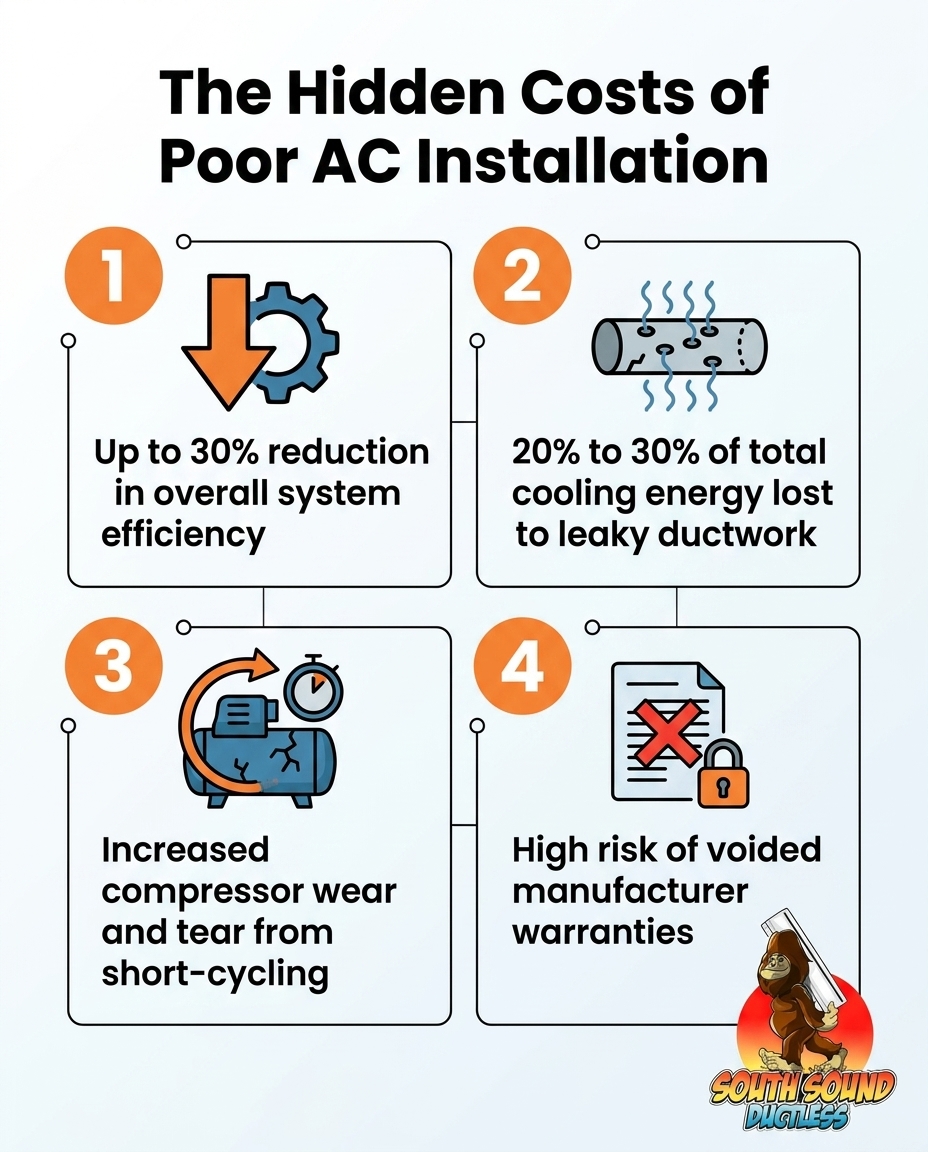
Because the system runs in brief, heavy bursts rather than steady, continuous cycles, you end up with highly uneven temperatures throughout the house. The rooms closest to the indoor unit become freezing cold, while bedrooms at the end of the hall remain warm. Worse, the constant starting and stopping places immense mechanical wear on the compressor, which requires the most energy during the initial startup phase.
Climate Dynamics: Short-Cycling and Humidity Control
An air conditioner actually performs two distinct jobs simultaneously: it lowers the ambient temperature, and it removes indoor humidity. For the system to successfully extract moisture from the air, the indoor evaporator coil must get extremely cold, and the air must blow across it for a sustained period.
When an oversized unit short-cycles, it simply does not run long enough to pull moisture out of your home. The temperature might drop, but the humidity remains trapped inside. This creates a highly uncomfortable, "clammy" indoor environment. You will find yourself constantly lowering the thermostat to try and feel comfortable, which only forces the oversized system to consume even more electricity.
This is especially problematic in environments like Tacoma WA. In our years of keeping local homes comfortable, our team at South Sound Ductless has seen firsthand how the regional climate features a unique mix of mild, damp base days mixed with sudden extreme heat spikes. During those mild but highly humid days, you need an air conditioner that runs long, slow cycles to prioritize dehumidification. If you are looking to ensure your system is calibrated for these exact weather patterns, working with experts in Puyallup AC installation can help you achieve the perfect balance between moisture control and peak cooling capacity.
If your system is sized based on a cheap contractor's guesswork, it will fail miserably at humidity control during the damp spring and early summer months, leaving your home feeling like a cold swamp.
The Invisible Tax: Duct Leakage and Efficiency Loss
Even if the equipment itself is sized correctly, the delivery system dictates your ultimate comfort. According to ENERGY STAR data, improper installation can reduce overall system efficiency by up to 30%. A massive portion of this energy waste traces directly back to how the equipment connects to your home's ductwork.
The specific impact of leaky ductwork is staggering. In a typical home, poorly sealed ducts account for 20% to 30% of total cooling energy loss. When a low-bid contractor rushes through an installation, they rarely take the time to properly seal the plenums, test the static pressure, or inspect the existing duct runs.
Here is how this invisible tax drains your wallet step-by-step:
1. Conditioned air escapes into unlivable spaces: Instead of reaching your living room, expensive cold air leaks into your hot attic, crawlspace, or garage.
2. Negative pressure pulls in hot air: As cold air escapes the supply ducts, the system creates negative pressure, sucking hot, dusty air from the attic into your return vents.
3. The system runs longer: Because the conditioned air never reaches the thermostat, the air conditioner is forced to run continuously to try and hit the target temperature.
4. The financial math compounds: You are left paying the compounding cost of wasted energy from duct leakage over a 10-year lifespan, turning a cheap installation into a decade-long financial burden.
If your home lacks the proper ductwork to support a traditional central system, or if your current ducts are severely compromised, exploring a ductless installation is often a much more efficient alternative than forcing a new central unit onto a failing ventilation network.
Peak Summer Strain and Premature System Failure
The true test of an air conditioning installation does not happen on a mild spring afternoon. The real physical toll on your equipment occurs during peak July heat waves, when the system is forced to run under maximum load. At South Sound Ductless, this is exactly when our emergency dispatch board lights up with calls from homeowners whose poorly installed, cut-rate units have broken down.
One of the most common shortcuts taken by low-bid contractors is improper refrigerant charging. Dialing in the exact refrigerant charge requires patience, specialized gauges, and a deep understanding of thermodynamics. Rushed jobs often leave the system either undercharged or overcharged. An incorrect refrigerant level alters the pressure inside the system, forcing the compressor to work substantially harder to move heat out of your home.
When you combine improper refrigerant levels with the constant short-cycling of an oversized unit, the mechanical strain becomes severe. The compressor is the heart of your air conditioner, and it is also the most expensive component to replace. The correlation between constant short-cycling under heavy summer heat and premature mechanical failure is undeniable.
A high-quality air conditioner should easily last 10 to 15 years. However, when you skip the Manual J load calculation for proper sizing and accept a rushed installation, you are actively losing years off the expected lifespan of the equipment. Replacing a dead compressor in year six will completely wipe out whatever money you saved on the initial installation bid.
Hidden Liabilities: Voided Warranties and Unpermitted Work
The risks of a cheap installation extend far beyond physics and airflow; there are significant administrative, legal, and financial liabilities involved. Modern HVAC manufacturers build highly advanced equipment, and they protect themselves with very strict warranty terms.
Manufacturer requirements stipulate that installation must be performed by licensed professionals following exact factory guidelines. If a contractor skips essential steps—like failing to perform load calculations, ignoring duct sealing standards, or brazing copper lines without flowing nitrogen—the manufacturer can and will void the factory warranty.
The permit problem:
To keep initial bid costs artificially low, cut-rate contractors frequently bypass local building permits. Pulling permits costs money and requires the contractor to subject their work to a third-party municipal inspection. By skipping the permit process in places like Tacoma WA, the contractor avoids scrutiny, but they transfer all the risk directly to you.
If unpermitted electrical or mechanical work causes damage to your home, your homeowners insurance may refuse to cover the claim. Furthermore, when it comes time to sell your house, unpermitted major system upgrades can derail the inspection process. Choosing the cheapest bid often leaves the homeowner fully responsible for all future repair and legal liabilities.
Precision Over Price: Evaluating the Long-Term Investment
When you review an HVAC proposal, you are not just buying a metal box that makes cold air; you are paying for the technical expertise required to integrate that box into your home's unique airflow network.
A comprehensive, high-quality installation quote should actually include a detailed scope of work. It should outline the specific testing procedures the technicians will use, the duct sealing methods they will apply, and the exact load calculations performed to select the equipment size. You should see line items for precise refrigerant charging, airflow balancing, and new electrical disconnects.
This is where the difference between a contractor and a true professional becomes clear. A reputable company focuses on high-quality, precise installation over "cheap" initial quotes that inevitably result in long-term costs from duct leakage, poor sizing, and premature system failure.
Investing in quality workmanship upfront pays for itself in sustained efficiency and longevity. The peace of knowing your system is mathematically calibrated to your home prevents the compounding cost of wasted energy from duct leakage over a 10-year lifespan. You get lower monthly bills, quieter operation, and a system that actually removes humidity during those muggy summer afternoons.
Secure Your Comfort with a Reliable Air Conditioning Partner
The upfront savings from cheap contractors are a mirage, quickly erased by operational inefficiencies, frequent breakdowns, and high utility bills. Protecting your home requires prioritizing contractors who rely on mathematical precision and strict technical standards rather than guesswork.
If you want a system designed to handle the specific weather patterns of Tacoma WA efficiently, you need a team that refuses to cut corners. By insisting on proper load calculations, meticulous duct sealing, and exact refrigerant charging, you ensure your new cooling system operates at peak performance for its entire lifespan.
Do not let a low bid trap you into a decade of high energy costs. Take the time to explore professional, meticulously calculated options for your next AC installation in Tacoma and experience the difference that true technical precision makes.
Frequently Asked Questions
What happens if an AC unit is oversized?
An oversized AC unit will cool your home too quickly and shut off before it completes a full cycle, a process known as short-cycling. This prevents the system from removing humidity, leaving your home feeling cold and clammy. Additionally, the constant starting and stopping places severe strain on the compressor, leading to premature mechanical failure.
How does duct leakage affect AC efficiency?
Duct leakage forces your air conditioner to work significantly harder because conditioned air escapes into uninsulated spaces like attics or crawlspaces before reaching your living areas. This can account for a 20% to 30% loss in total cooling energy. Consequently, the system runs longer cycles, driving up your monthly utility bills and accelerating wear and tear on the equipment.
Why do AC units short-cycle after installation?
Short-cycling immediately following a new installation is almost always the result of the contractor installing an oversized unit that is too powerful for the home's square footage and heat load. It can also be caused by improper refrigerant charging or severely restricted airflow from failing to update older, undersized ductwork. A proper load calculation prevents this issue entirely.
How important is a Manual J calculation?
A Manual J calculation is the most critical step in the HVAC design process, as it dictates the exact cooling capacity your specific home requires. It replaces unreliable "rule of thumb" guesswork by factoring in your home's insulation, window placement, ceiling height, and local climate. Skipping this calculation guarantees an inefficient system that will either struggle to cool or suffer from short-cycling.
What are the signs of a bad AC installation?
The most immediate signs of a poor installation include uneven temperatures from room to room, a system that turns on and off every few minutes, and high indoor humidity despite the AC running. You might also notice strange whistling noises from the vents due to poor airflow balancing, or discover that the contractor failed to pull the required local building permits.
Can a poorly installed AC void the manufacturer warranty?
Yes, major HVAC manufacturers include strict language in their warranty agreements requiring the equipment to be installed by licensed professionals according to exact factory specifications. If a contractor skips mandatory steps like proper brazing techniques, correct refrigerant charging, or matching the indoor and outdoor units correctly, the manufacturer will likely deny any future warranty claims.
"The DIY ductless installation was straightforward and saved us a lot of money! I highly recommend South Sound Ductless for their excellent support and quality products."


"Our new ductless system has transformed our home’s comfort level. The team at South Sound Ductless was professional and knowledgeable throughout the process!"
Get Your Comfort Today!
Contact us for expert HVAC solutions and consultations.
Stay Updated with Our Newsletter
Subscribe for expert HVAC tips, the latest updates, and exclusive promotions delivered right to your inbox.

FAQs
Here are some common questions about our HVAC services and ductless systems.
Ductless heating uses a system of indoor and outdoor units to provide efficient heating. These systems are ideal for homes without existing ductwork. They offer flexibility and can be controlled room by room.
Our DIY ductless program simplifies installation with pre-charged kits. You can easily mount the indoor unit, connect refrigerant lines, and set up the outdoor condenser. It's designed for quick and efficient setup.
Ductless systems provide energy efficiency, reducing utility bills while maintaining comfort. They improve indoor air quality and allow for customizable temperature control. Additionally, they take up less space than traditional systems.
Yes, we offer financing through Enhancify to make your HVAC investments more manageable. This allows you to enjoy comfort without the immediate financial burden. Explore our options to find a plan that suits you.
Regular maintenance is key to keeping your ductless system running efficiently. Schedule annual tune-ups and clean the filters regularly. This ensures optimal performance and prolongs the life of your system.
Still have questions?
We're here to help!