

Timely HVAC Filter Replacement: Enhance Your Air Quality
Choosing & Replacing Your HVAC Air Filters for Better Air Quality: Expert Guide to Filter Types, Sizes, and Replacement Schedules

At South Sound Ductless, located in Tacoma, WA, we prioritize maintaining high indoor air quality for your health and comfort. We understand that HVAC air filters are essential in capturing particles, allergens, and pollutants that infiltrate your home’s air. Our expertise guides you through choosing and replacing the right HVAC air filters to significantly improve the air quality within your residence. This comprehensive guide covers the various filter types, how to select the appropriate sizes, and when you should replace them to ensure your system’s optimal function. Regular filter maintenance prevents unnecessary repairs and keeps your HVAC system running efficiently. We also share insights on allergy impacts and recent HVAC technology advancements, equipping you with the knowledge to make informed decisions tailored to your air quality needs.
Filter Types:
Choosing the correct air filter type for your HVAC system is fundamental to enhancing indoor air quality. Different filters address different needs, offering various levels of filtration efficiency. Common options include fiberglass, pleated, HEPA, and washable filters. Each filter type has specific benefits based on its design and materials, helping you select the one that matches your air purity requirements precisely. Understanding these options empowers you to improve your home’s air environment effectively.
What Are the Different HVAC Filter Types and Their Benefits?
Our selection includes various HVAC air filters, each designed to meet distinct air filtration goals with specific advantages. The key types are:
- Fiberglass Filters: These are budget-friendly and effective for general dust and larger debris. They provide a basic level of filtration suitable for households without special air quality concerns, helping keep your system protected from large particles.
- Pleated Filters: With a larger surface area, pleated filters capture more dust and allergens with improved efficiency. Their design offers enhanced filtration and is a popular choice for homes with moderate air quality demands.
- HEPA Filters: Recognized for capturing 99.97% of particles as small as 0.3 microns, HEPA filters are ideal for allergy sufferers and those seeking the highest filtration standards. They significantly reduce airborne contaminants and improve respiratory comfort.
- Washable Filters: These reusable filters are an economical and eco-friendly option. They offer long-term savings but require regular cleaning to maintain their effectiveness, ensuring that your HVAC system functions properly over time.
Selecting the right filter type affects both your home’s air quality and the efficiency of your HVAC equipment.
How Do Pleated, Electrostatic, and Washable Filters Compare?
When considering air filter options, the designs impact their effectiveness and upkeep demands. Here’s how pleated, electrostatic, and washable filters perform:
- Pleated Filters: Their design allows superior dust capture and they typically last longer between changes. Nonetheless, once clogged, they must be replaced promptly to maintain airflow and system performance.
- Electrostatic Filters: Utilizing a charge to attract particles, these filters maintain effectiveness over a longer period compared to traditional filters. They excel at trapping smaller particles and can provide improved indoor air quality with consistent maintenance.
- Washable Filters: These are sustainable since they can be cleaned and reused multiple times. However, to ensure optimal efficiency, regular cleaning is essential, as accumulated particles can reduce their performance if neglected.
Understanding these distinctions allows you to pick a filter type aligned with your maintenance preferences and air quality goals.
Filter Sizes:
Choosing the proper HVAC air filter size is critical for effective system operation. While filters come in common dimensions like 16x20 inches, 20x25 inches, and 14x20 inches, verifying the exact size for your specific unit is necessary to avoid inefficiencies. Incorrect filter sizing can cause air leaks, reduce energy efficiency, and increase operational costs.
How to Determine the Correct Furnace Filter Size for Your HVAC System?
To select the right filter size, we recommend the following steps:
- Measurement: Measure your current filter or consult your furnace’s manual for accurate dimensions to ensure a proper fit.
- Standard Sizes: Familiarize yourself with common filter sizes available in the market to make purchasing straightforward.
- Custom Sizing: If your HVAC system calls for custom filters, consider ordering based on your precise measurements to guarantee optimal performance.
Taking time to determine the appropriate size helps reduce energy costs and prolongs your HVAC unit’s life expectancy.
What Are Standard Furnace Filter Dimensions and How to Measure Accurately?
Accurate measurement involves these methods:
- Measure Dimensions: Use a tape measure to record the length, width, and thickness of your existing filter for reference.
- Round Down: Slightly rounding down measurements can prevent interference with airflow and help the filter fit neatly.
- Standard Dimensions: Knowing standard sizes aids in finding replacements that are readily available, simplifying maintenance.
Careful sizing ensures your filter fits securely, maintaining system efficiency and preventing air bypass.
Why Does Choosing the Right Furnace Filter Size Matter for HVAC Efficiency?
Proper filter sizing is crucial to HVAC system efficiency for several reasons:
- Airflow Optimization: A filter that fits correctly maintains consistent airflow, preventing the system from overworking.
- Energy Consumption: Ill-fitting filters increase resistance, causing the HVAC system to draw more power and raising energy bills.
- Component Longevity: Correct filter sizes help protect internal HVAC components from premature wear and tear due to contaminants, sparing costly repairs.
At South Sound Ductless, we emphasize correct sizing as a key step in keeping your system operating smoothly and economically.
Replacement Schedule:
Maintaining an appropriate filter replacement schedule is essential to preserve air quality and HVAC efficiency. As a general guideline, air filters should be replaced every one to three months, depending on system usage, household conditions, and specific filter types.
What Is the Recommended HVAC Filter Replacement Schedule?
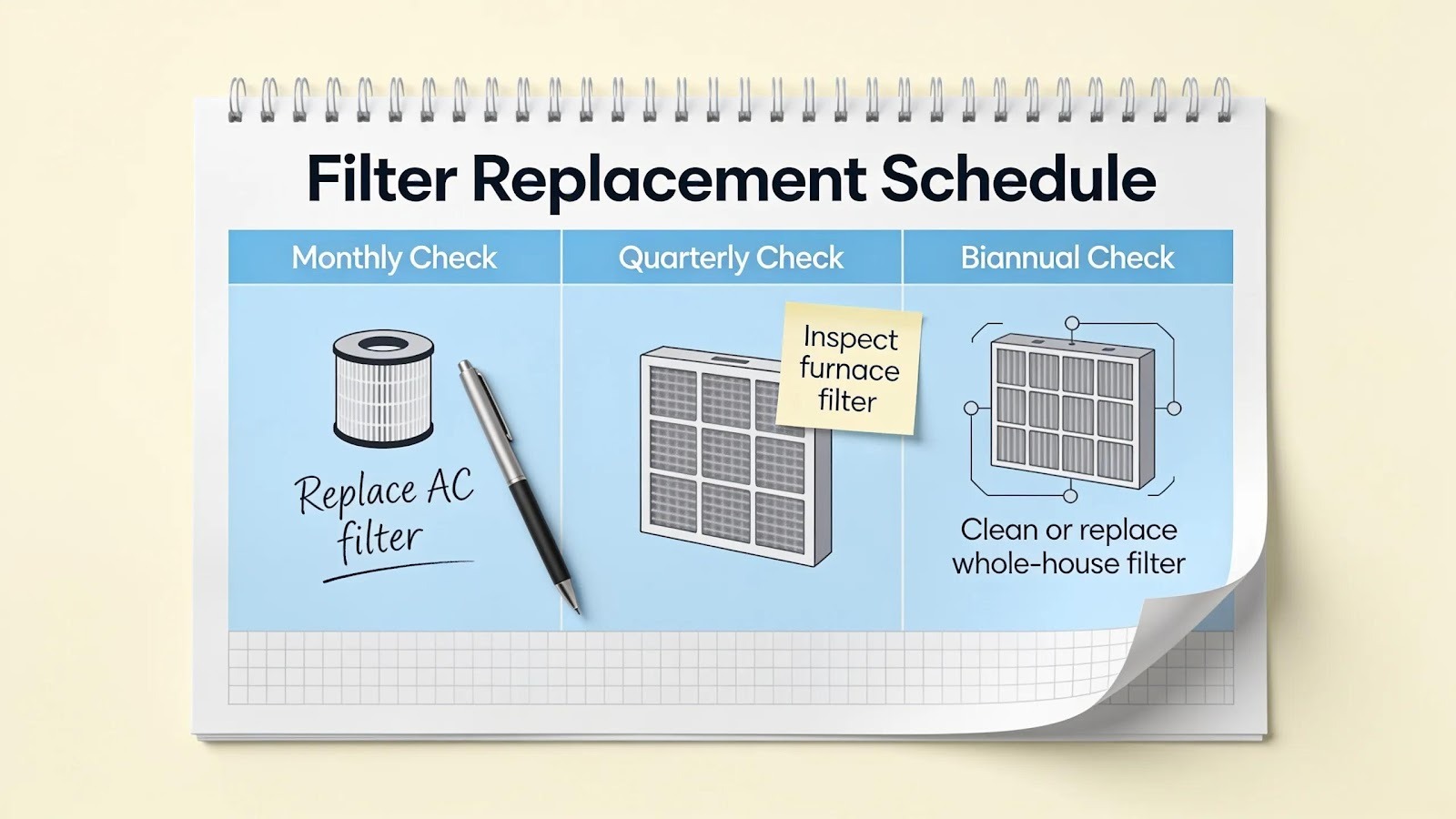
The recommended replacement frequency varies based on several factors:
- Usage Rate: Homes where the HVAC system runs continuously usually require monthly filter changes to maintain clean airflow and prevent clogging.
- Household Size: Larger families and homes with pets typically accumulate more particulates, necessitating more frequent replacements to ensure good air quality.
- Filter Type: Higher efficiency filters may last longer but require regular inspection to confirm ongoing effectiveness.
Following a tailored replacement routine ensures consistent air cleanliness and system efficiency.
How Often Should You Replace HVAC Air Filters for Optimal Performance?
For peak performance, consider these general replacement intervals:
- Standard Filters: Should generally be changed every month, especially during heavy use periods.
- Pleated Filters: Often effective for around three months but require assessment to determine if sooner replacement is needed.
- HEPA Filters: These can be checked about every six months; the replacement timeline may vary based on actual usage and environmental conditions.
Adjusting these suggestions based on your home environment and HVAC demands helps sustain high-quality indoor air.
What Are Signs Your HVAC Filter Needs Immediate Replacement?
Immediate filter replacement is needed if you notice:
- Reduced Airflow: If rooms feel warmer or cooler than expected, your filter may be clogged, restricting airflow and diminishing comfort.
- Increased Energy Bills: A sudden rise in utility costs can indicate the HVAC system working harder due to a dirty or blocked filter.
- Visible Dust Accumulation: More dust settling around vents and surfaces suggests your filter is not effectively trapping particles and should be replaced promptly.
Timely replacement helps prevent system malfunctions and maintains consistent air quality.
Maintenance Checks:
Regular maintenance is vital to extend your HVAC system’s lifespan and maintain its performance. Checking your unit periodically allows identification of potential problems before they escalate, safeguarding your indoor air quality and comfort.
When and How to Schedule Maintenance
We advise scheduling professional maintenance once or twice annually, including tasks such as:
- Inspect Components: Our technicians carefully check ductwork and motors to ensure everything functions as intended and to catch early signs of wear.
- Clean Systems: Thorough removal of dust and debris buildup improves system efficiency and prolongs equipment life.
- Calibrate Units: Adjusting settings according to seasonal changes optimizes your HVAC system’s performance tailored to your home’s needs.
This routine helps prevent unexpected breakdowns and keeps your air fresh and healthy.
Symptoms of Needing a Professional Check-Up
Be attentive to signs indicating it’s time to call our experts:
- Strange Noises: Unfamiliar sounds from your HVAC unit can signal mechanical issues needing immediate attention.
- Inconsistent Temperatures: If your home struggles to maintain a steady temperature, it may indicate system inefficiencies or malfunctions.
- Constant Cycling: Frequent turning on and off of the HVAC system can be caused by problems such as dirty filters or blocked ducts that require inspection.
Early detection through monitoring these symptoms can save you from costly repairs and discomfort.
Monitoring Air Quality:
We encourage regular indoor air quality monitoring to ensure a healthy living environment. Effective strategies include using air quality monitors, understanding outdoor pollutant influences, and adapting to changing seasons in Tacoma, WA.
How to Monitor Indoor Air Quality Effectively
To keep indoor air quality at its best, consider these approaches:
- Air Quality Monitors: Devices capable of tracking particulate matter, humidity, and volatile organic compounds (VOCs) provide real-time data about your home's air health.
- Regular Ventilation: Periodically opening windows facilitates fresh air exchange and reduces indoor pollutant concentration.
- Track Allergens: Being aware of pollen and outdoor air quality alerts helps you manage HVAC use to minimize allergen intrusion.
Implementing these methods promotes a safer, more refreshing indoor environment that benefits everyone in your household.
How Do Different Air Filters Impact Allergies and Indoor Air Quality?
The filtration efficiency of various HVAC filters directly affects allergy symptoms and indoor air cleanliness. Selecting the right filter type is crucial to minimizing allergens and creating a comfortable living space.
Which Filters Are Most Effective at Reducing Allergens and Pollutants?
Filters with the best allergen reduction capabilities include:
- HEPA Filters: These capture a wide range of common allergens like pollen and pet dander, significantly helping those with sensitivities breathe easier inside their homes.
- MERV-Rated Filters: Filters rated with higher MERV scores provide superior capture of airborne particles, delivering improved air purity.
- Electrostatic Filters: By electrically charging particles, these filters enhance filtration effectiveness and can serve allergy sufferers well.
Choosing the most suitable filter type depends on specific allergy challenges and desired air quality improvements.
What Are Customer Experiences with Allergy-Friendly HVAC Filters?
Many of our clients in Tacoma, WA report noticeable relief from allergy symptoms when switching to high-performance filters such as HEPA or high-MERV options. These customers experience fewer respiratory issues and enjoy a more comfortable living environment. We see firsthand how improved air filtration can positively impact quality of life and promote overall well-being.
What Recent Advances in HVAC Filter Technology Should Homeowners Know?
At South Sound Ductless, we stay current with HVAC filter technology to offer you the latest innovations that enhance air quality and energy efficiency.
How Are New Filter Materials and Designs Improving Air Quality and Energy Efficiency?
Recent innovations include:
- Electrostatic Materials: These advanced materials better attract and retain smaller particles, boosting filtration performance without sacrificing airflow.
- Advanced Fiber Composition: New fibers are engineered to maintain high pollutant capture rates while allowing improved airflow, reducing strain on HVAC systems.
- Smart Filters: Equipped with sensors, these filters detect when replacement is needed and alert homeowners, simplifying maintenance and ensuring consistent air quality.
Such advancements contribute to healthier indoor environments while also optimizing system operation and efficiency.
What Emerging Standards and Ratings Affect Filter Selection in 2025-2026?
Emerging standards focus on more rigorous testing of air filters for filtration efficiency and energy conservation. Staying informed about these developments ensures you select filters that meet both current air purification needs and future regulations. At South Sound Ductless, we guide you through understanding MERV ratings and upcoming standards to choose the best filter options that maintain clean air and reduce environmental impact.
We invite you to reach out to our team to discuss your HVAC filtration needs and how we can help improve your indoor air quality efficiently and affordably in Tacoma, WA.
Enhance Your Home’s Air Quality Today
Contact South Sound Ductless to schedule a consultation or service appointment. Let us help you select and maintain the perfect HVAC air filters tailored for your home in Tacoma, WA, ensuring cleaner air and improved comfort year-round.
"The DIY ductless installation was straightforward and saved us a lot of money! I highly recommend South Sound Ductless for their excellent support and quality products."


"Our new ductless system has transformed our home’s comfort level. The team at South Sound Ductless was professional and knowledgeable throughout the process!"
Get Your Comfort Today!
Contact us for expert HVAC solutions and consultations.
Stay Updated with Our Newsletter
Subscribe for expert HVAC tips, the latest updates, and exclusive promotions delivered right to your inbox.

FAQs
Here are some common questions about our HVAC services and ductless systems.
Ductless heating uses a system of indoor and outdoor units to provide efficient heating. These systems are ideal for homes without existing ductwork. They offer flexibility and can be controlled room by room.
Our DIY ductless program simplifies installation with pre-charged kits. You can easily mount the indoor unit, connect refrigerant lines, and set up the outdoor condenser. It's designed for quick and efficient setup.
Ductless systems provide energy efficiency, reducing utility bills while maintaining comfort. They improve indoor air quality and allow for customizable temperature control. Additionally, they take up less space than traditional systems.
Yes, we offer financing through Enhancify to make your HVAC investments more manageable. This allows you to enjoy comfort without the immediate financial burden. Explore our options to find a plan that suits you.
Regular maintenance is key to keeping your ductless system running efficiently. Schedule annual tune-ups and clean the filters regularly. This ensures optimal performance and prolongs the life of your system.
Still have questions?
We're here to help!